In his essay on “what gives,” Jean-Luc Marion argues that the “authentic” painting channels the unseen, allowing it to attain visibility even as the icon allows something of the unseen to pass through into the world of phenomenon. Even as the gaze passes through the icon, the visibility of the painting passes through the artist and is recorded. This way of thinking about the creation of art seems to be rooted in the same theories of reference that motivate Baudrillard’s distinction between the icon and the idol. Just as for the disjunctivist a hallucination is metaphysically distinct from a veridical experience of seeing a pink elephant, for Marion and Baudrillard before him, a work of art which refers to the artist’s phenomenological experience alone is something quite distinct from a work of art that points beyond that which the senses can experience. To be sure, Marion makes a distinction between the unseen (or unheard) which can become visible and the invisible which would remain forever, thereby remaining the intentional object of a visible experience.
For Marion the idea of the form which matter emulates is something very different, for the form itself is invisible, beyond the realm of phenomenon, and cannot, by its very nature be conceived of. The purpose of the revealed unseen, then, is to point the gaze of viewers and of the artist towards an invisible which can never be fully visualized. If the form fits the measure of the gaze and the viewers’ expectations, then it is a mere reflection of that phenomenal experience and hence an idol. It is for precisely this reason that Marion dismisses conceptual art as “merely academic”. Because the artist fully conceives the piece in his own mind, his creation of the piece cannot reveal a glimpse of the invisible but rather is limited to translation and reproduction of the previously seen.
In this sense conceptual art seems to fall into Baudrillard’s category of idols and simulacra—yet another case of the artist rendering the phenomena of a visual experience in visible form. But I would argue that Marion is perhaps overhasty in consigning both contemporary art in general and conceptual art in particular to the realm of idols. Marion speaks of the icon as something which the viewer looks through, something which provides a window to the world of the invisible.
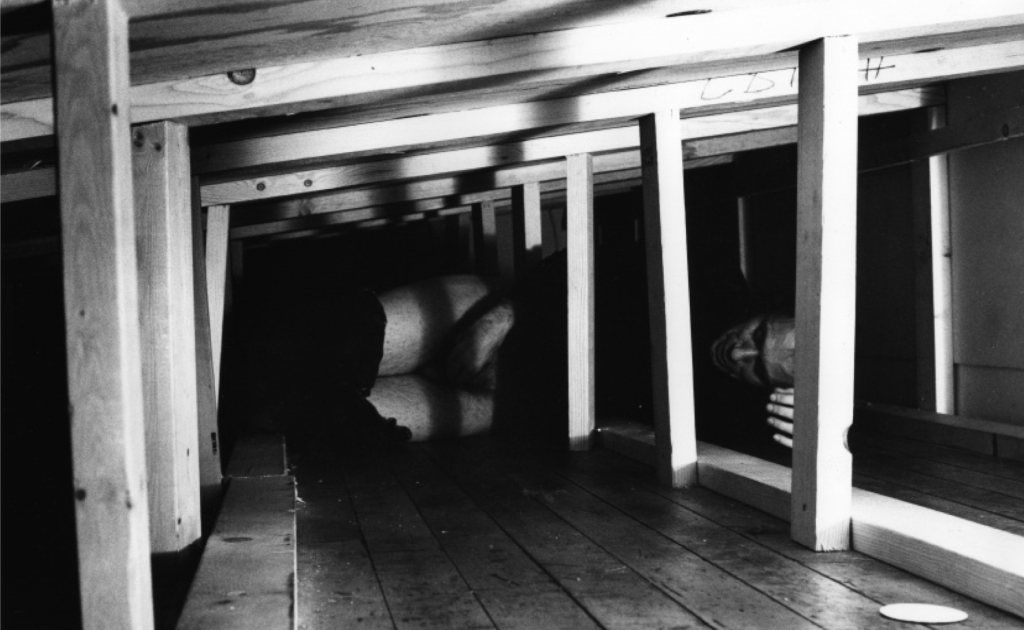
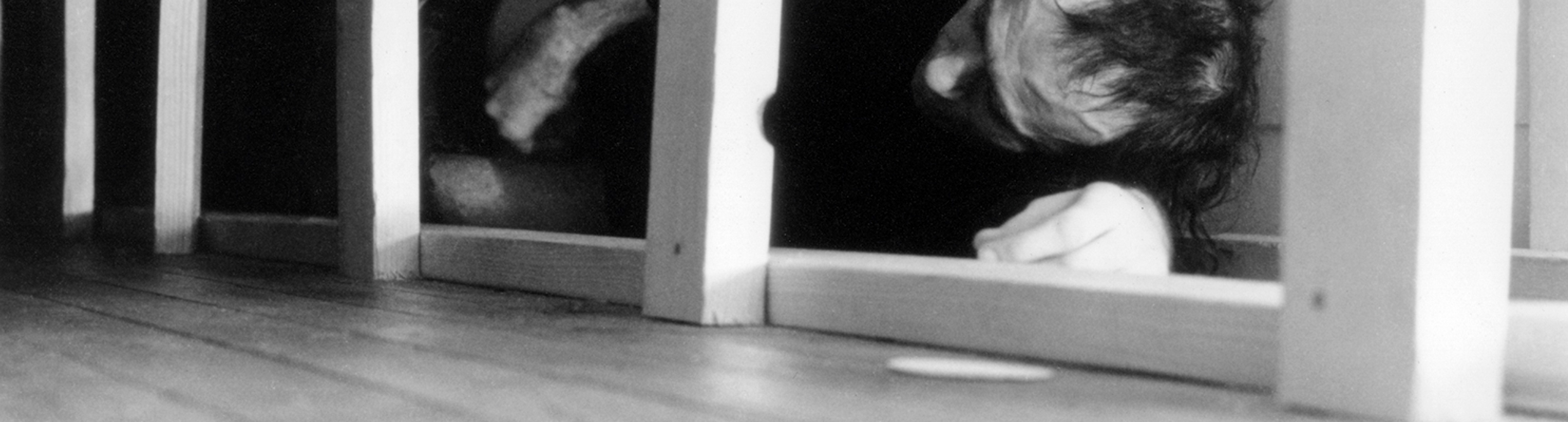
In a notorious 1971 performance piece, New York based artist Vito Acconci lay beneath the floor of the Sonnabend Gallery, masturbating, and speaking his fantasies about the visitors into a microphone. Here the artist acts spontaneously, himself unaware of what he will give voice to. The visitors to the gallery encountered not only the literally unseen, but also the invisible in Marion’s sense of the word insofar as they saw through the piece. Mr. Acconci, hidden from view but audible, is not the visual focus of the piece, but nor is he in any other sense the focal point of the piece. Surely the catholic Marion has in mind some sort of ineffable “Gød” when he speaks of the invisible. But there is no reason that concepts, equally ineffable and unseeable, might not be analyzed in the same fashion. Marion’s quarrel with television, and with idols in general, is that the images represented therein reference nothing but other images and the viewers own conceptions thereof. But Marion allows for the possibility that some images (icons) might reference things which are invisible.
Certainly if any image does this, the Acconci piece does. The gallery visitors need not look at themselves in any sense. Rather, they are invited to look at something invisible looking at them through someone unseen. Acconci’s words direct the gaze of the gallery visitors towards erotic ideas which the artist is allowing to spontaneously flow through him. The words which they hear are only an approximation of the literally unhearable thoughts, an incomplete medium. What the words refer to is, inherently, invisible. The artist’s spontaneous vocalizations act as a channel through which an approximation of some unthinkable idea passes.
In a 2008 interview the artist describes his work in such a way as to indicate that, at least for Acconci, the work functioned as an icon.
“It wasn’t about ‘conveying’; it wasn’t that there was a theme, a meaning, that you could phrase in some other way – in writing, say, in talking – and then you demonstrated it in some situation, in some activity. The aim was in the opposite direction: you set up a situation, you performed an action, so that you – and others, the receivers – could see what complex, what mix of meaning and themes might possibly be stirring inside.”
The invisible which Acconci’s piece allows the viewer to look towards is not something which is found in the piece itself, or even in the artist’s mind. Implicit in his own description of his work seems to be the assumption that there might exist meaning and theme which is beyond the phenomenality of that which conveys it to a viewer.
Nor does it seem that in this case the artwork is merely conveying an idea whose source is the mind of the artist. At least insofar as the artist conceives of his work functioning, the phenomenal experience of the visitors to the gallery was not causally dependent upon anything in either their minds or Mr. Acconci’s.